
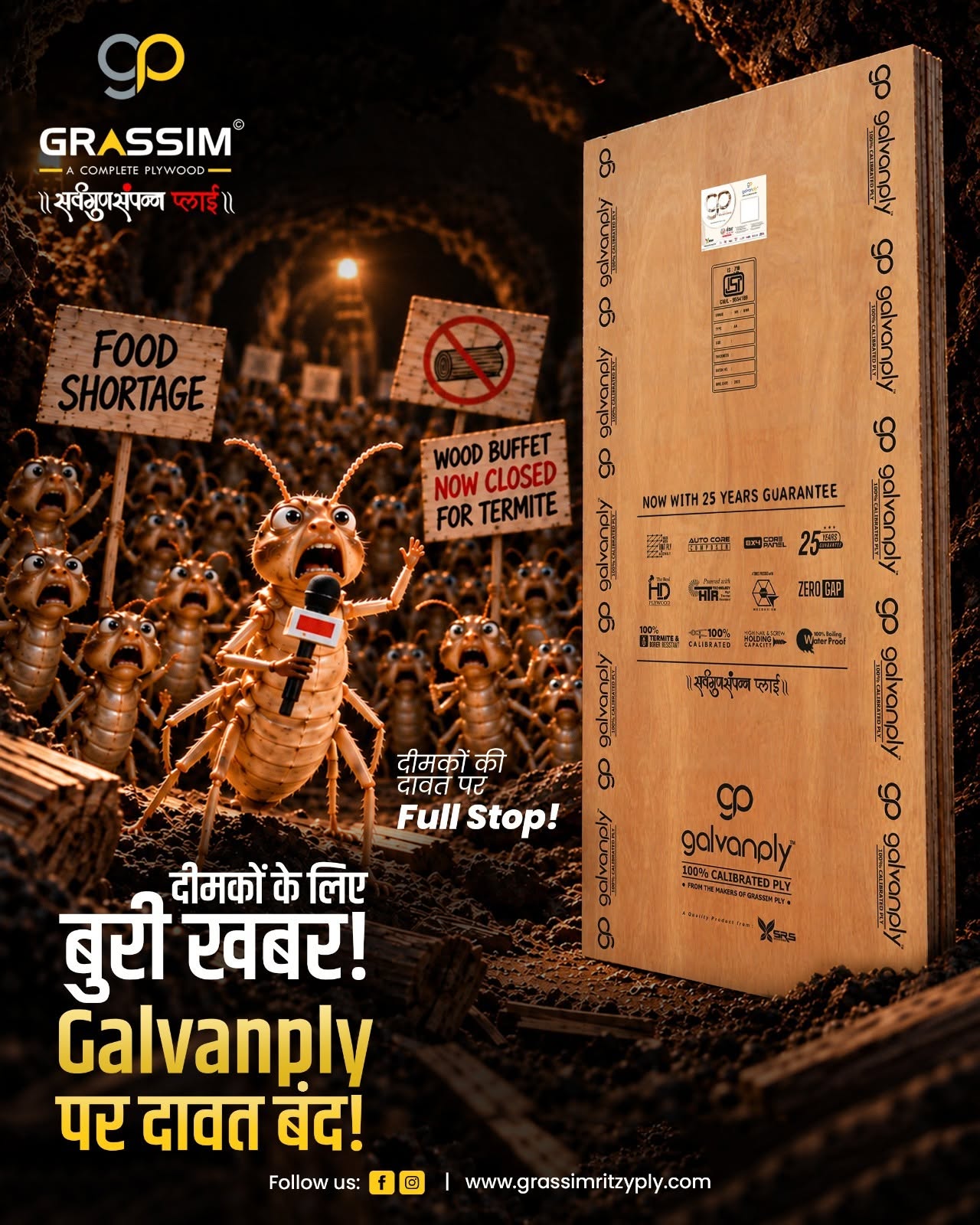
Termites can slowly destroy wood structures by hollowing them out from the inside. This is where termite proof plywood comes in. They offer reliable, durable protection against pests that harm your wood structure silently. Due to its long-lasting structure, it has been popularly used in the construction industry. But before you buy, there are things you must check to ensure excellent quality and strength of your product. In this guide, we will talk about the top things to check before buying plywood that people often ignore.
1. Check BIS Certification and ISI Marks
You must check the Bureau of Indian Standards (BIS) stamp printed on the sheet. It should be IS 710, which governs marine plywood, or IS 303, which governs moisture-resistant (MR), boiling water proof (BWP), and boiling water resistant (BWR). Verify the CM/L (Certification Marks Licence) number by entering it on the official BIS portal to ensure it is made in compliance with government standards.
2. Ensure VPI Treatment and GLP
Check that the plywood has undergone Vacuum Pressure Impregnation (VPI) treatment to ensure that anti-termite and anti-borer chemicals are forced deep into every layer rather than just the outer surface of the plywood. Also, look for Glue Line Protection (GLP) that makes sure both chemicals are bound directly into the adhesive used between wood layers.
3. Look for Core Timber Species
A termite proof plywood must have core timber species, prioritizing hardwoods over softwoods. Hardwoods have tight, dense fibers that hold preservatives and resist insect chewing much better. A dense, chemically treated hardwood plywood feels noticeably heavy and produces a more solid thud than a hollow-sounding softwood.
4. Must Have Phenol Formaldehyde (PF) Resin
Choose the plywood bonded with dark-coloured Phenol Formaldehyde (PF) resin rather than standard Urea Formaldehyde (UF) glue because termites occur in damp, decaying wood. This is why PF resin creates a waterproof bond that helps prevent moisture from swelling the wood fibers and attracting pests, keeping the plywood clean and strong for a long period of time.
5. Check for Warranty
It is important to check the warranty of the plywood to ensure premium quality and longevity. Grassim Ritzy Ply promises specific performance assurance and a warranty for its customers so that they receive an excellent quality and durable product. Warranty helps customers get their product replaced without worrying about extra payment.
6. Inspect Cut Edges
Look at the cut edges of the plywood sheet. If there is uniform color penetration or a designated chemical/phenolic odor, it implies core-level protection. If there is a stark change in color or dry, untreated inner layers, it means the protection is only on the sprayed or dipped finished sheet. Always ask for a sample of a newly cut piece and inspect it before buying.
Final Word
Purchasing termite proof plywood isn’t about avoiding pests. There are many things to check before you lock a deal, such as BIS certification, VPI treatment, core timber species, PF resin, and warranty. It ensures a blend of style, strength, and sustainability. Whether you want to renovate or build a new house, Grassim Ritzy Ply should be your ideal choice for purchasing the best plywood. Our plywood offers excellent strength to bear loads in harsh conditions and is bonded with water-resistant and waterproof-grade resin to resist moisture. We manufacture using the VPT technique to protect plywood from fungi, termites, and borers. Our team complies with sustainable sourcing and maintains strict quality standards to deliver a solid-quality product to our customers.
FAQs
If you purchase from a top manufacturer like Grassim Ritzy Ply, their plywood is highly resistant to termites and lasts longer.
Factory-treated plywood uses VPI or core veneer chemical infusion that offers deep protection, whereas DIY surface sprays only coat the outside and leave the inner layers vulnerable.
Plywood with BWP or IS 710 grade can be used in wet areas like kitchens and bathrooms.
Cut edges and drilled holes are protected through full-core chemical treatments during manufacturing, combined with on-site physical sealing and chemical re-treatment during installation.
Yes, they are safe for outdoor applications when applied with a weather-proof coating as well to enhance their performance against harsh environmental factors.